Hope Town · Elbow Cay · Abaco
Elbow Cay & Hope Town: The Complete Island Guide
Where it is, how to get here, what makes it special, and how to get around — written by hosts who have spent years on the island.
Last updated: September 2026
What is Elbow Cay?
A five-mile island with a lighthouse, a harbour, & very few cars
Elbow Cay is a slender barrier island in the Abacos, the northern-most island group of the Bahamas. It is about five miles long, rarely more than a few hundred yards wide, and sits four miles across the Sea of Abaco from Marsh Harbour, the region's hub. Its one settlement, Hope Town, was founded by British Loyalists in 1785 and is watched over by the striped Elbow Reef Lighthouse.
The island has two very different coasts. The east side faces the open Atlantic: long white beaches, a fringing reef, and the surf that gave Catch A Wave its name. The west side faces the Sea of Abaco: glassy, shallow, boat-friendly water, harbours, and sunsets. Most houses, including ours, sit between the two, so you can choose your water by the hour.
Around four to five hundred people live here year-round, many of them descended from the original settlers. There are no rental cars, no chain hotels, and no traffic lights. Visitors move by golf cart, bicycle, and boat, and the historic core of Hope Town is closed to carts entirely. The pace is the point.
This page is our answer to the questions guests ask before their first visit: where exactly is it, how do I get there, what is there to see, when should I come, and how does daily life on a small Out Island actually work. For deeper dives, each section links to a dedicated guide.
Where is Elbow Cay?
On the map
Find the Abacos at the top of the Bahamas map, about 180 miles east of Palm Beach, Florida. Great Abaco is the long mainland island; a string of small cays shelters its eastern shore and creates the Sea of Abaco between them. Elbow Cay is the cay directly east of Marsh Harbour, with Man-O-War Cay to its north and Lubbers Quarters and Tilloo Cay to its south.
From north to south the island runs: Hope Town and its harbour; the Atlantic beaches and residential lanes of the middle island; White Sound, a second harbour with marinas and restaurants; and finally the palm-lined sandbar of Tahiti Beach at the southern tip. Catch A Wave sits on the Atlantic side near White Sound, roughly midway along.
Coordinates for the curious: about 26.5° N, 76.97° W. Cell coverage is good across the island, and Google Maps works for cart navigation.
A short history
Loyalists, wreckers, & a stubborn lighthouse
Hope Town was founded in 1785 by Wyannie Malone, a widow from Charleston, South Carolina, who arrived with her children and other British Loyalists fleeing the newly independent United States. The settlers built the clapboard cottages that still line the harbour, fished, farmed what the thin soil allowed, and, like many Out Islanders, made a living salvaging ships that struck the reef offshore.
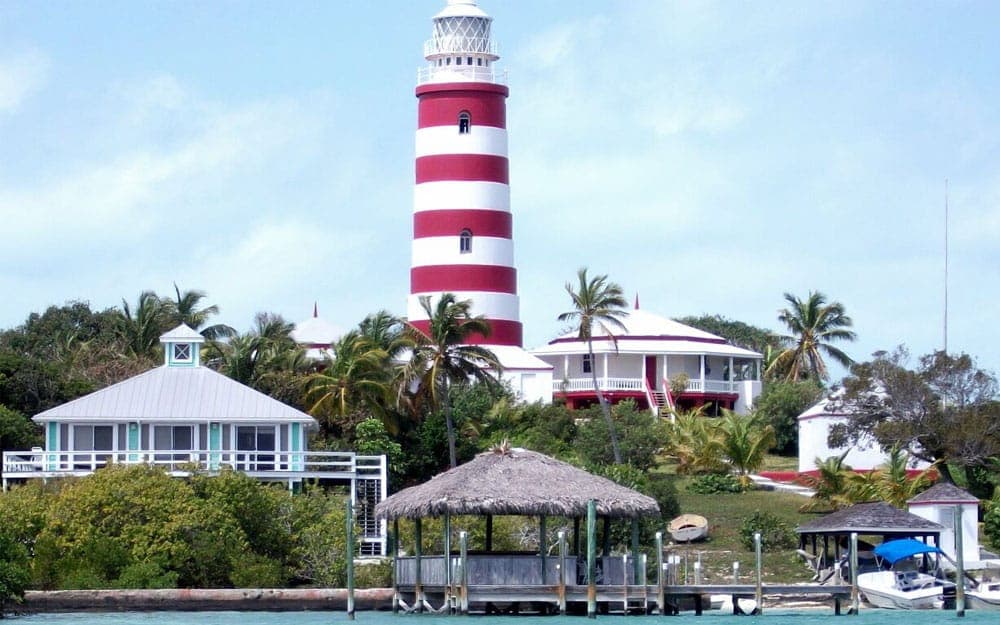
That reef is why the lighthouse exists, and why the locals fought it. When the Imperial Lighthouse Service began building the Elbow Reef Lighthouse in 1862, wrecking was a major source of income and the light threatened it. The tower was finished anyway and first lit in 1864. It stands 89 feet tall, painted in five horizontal bands of red and white, and it still burns kerosene. Each evening a keeper lights the mantle and hand-winds the clockwork that turns the first-order Fresnel lens. It is one of only three manually operated lighthouses left in the world, and you can climb it. Our lighthouse guide has directions, hours, and history.
The twentieth century brought boat building, then tourism. White Sound was developed in 1960 and became the island's second harbour, with marinas and the resorts that anchor the middle of the island today. Second homes followed along the Atlantic beaches, many owned by families who have returned every winter for generations.
On September 1, 2019, Hurricane Dorian crossed the Abacos as a Category 5 storm with sustained winds of 185 mph, the strongest hurricane ever recorded in the Bahamas. Most structures on Elbow Cay were damaged or destroyed. The lighthouse survived. In the years since, homes, docks, restaurants, and marinas have been rebuilt, often stronger than before, and the island has been fully open to visitors for several seasons. Hope Town's recovery is a point of real pride here, and you will hear about it.
Arrival & Transport
How to get to Elbow Cay
There is no airport and no bridge on Elbow Cay. Every visitor arrives the same way: fly to Marsh Harbour, taxi to the dock, ferry across. Door to door from South Florida it is usually a half-day trip.
1. Fly into Marsh Harbour (MHH)
Leonard M. Thompson International Airport in Marsh Harbour has direct flights from Fort Lauderdale, Miami, West Palm Beach, and Nassau, with seasonal service from farther afield. Flight time from South Florida is under an hour.
2. Taxi, then the ferry
Taxis wait at the airport for the ten-minute ride to the ferry dock. The passenger ferry crosses the Sea of Abaco to Hope Town or White Sound in about twenty minutes, several times a day. Bring cash for both.
3. Your golf cart is waiting
Reserve a cart before you travel and the rental company will have it at the dock or the house. From the White Sound dock, Catch A Wave is a few minutes away.
Arriving by boat?
Hope Town Harbour and White Sound both have marinas with transient dockage and moorings, and the Sea of Abaco is one of the most sheltered cruising grounds in the Bahamas. Step-by-step flight, taxi, and ferry details are in our getting to Abaco guide.
The island, end to end
Three places, one island
Elbow Cay is small enough to cross in a fifteen-minute cart ride, but each part of it has a distinct character.
North end
Hope Town
The historic settlement wraps around a near-perfect circular harbour. Two narrow lanes, Back Street and Front Street, run between pastel cottages, picket fences, a bakery, gift shops, the Wyannie Malone Historical Museum, and the post office. Golf carts stop at the edge of town; inside it is feet and bicycles only.
Across the harbour stands the lighthouse. Harbour-side restaurants and bars fill up at sunset, and the ferry from Marsh Harbour lands here.
Mid-island
White Sound & the Atlantic beaches
The middle of the island is where most visitors stay. On the sound side, White Sound is a sheltered harbour with marinas, boat rentals, the Abaco Inn and Sea Spray resorts, and a second ferry dock. On the ocean side, a long Atlantic beach runs for miles, empty for most of its length, with the surf break that Catch A Wave looks out on.
Groceries, water refills, and a couple of restaurants are here, so you rarely need to go into town for essentials.
South end
Tahiti Beach
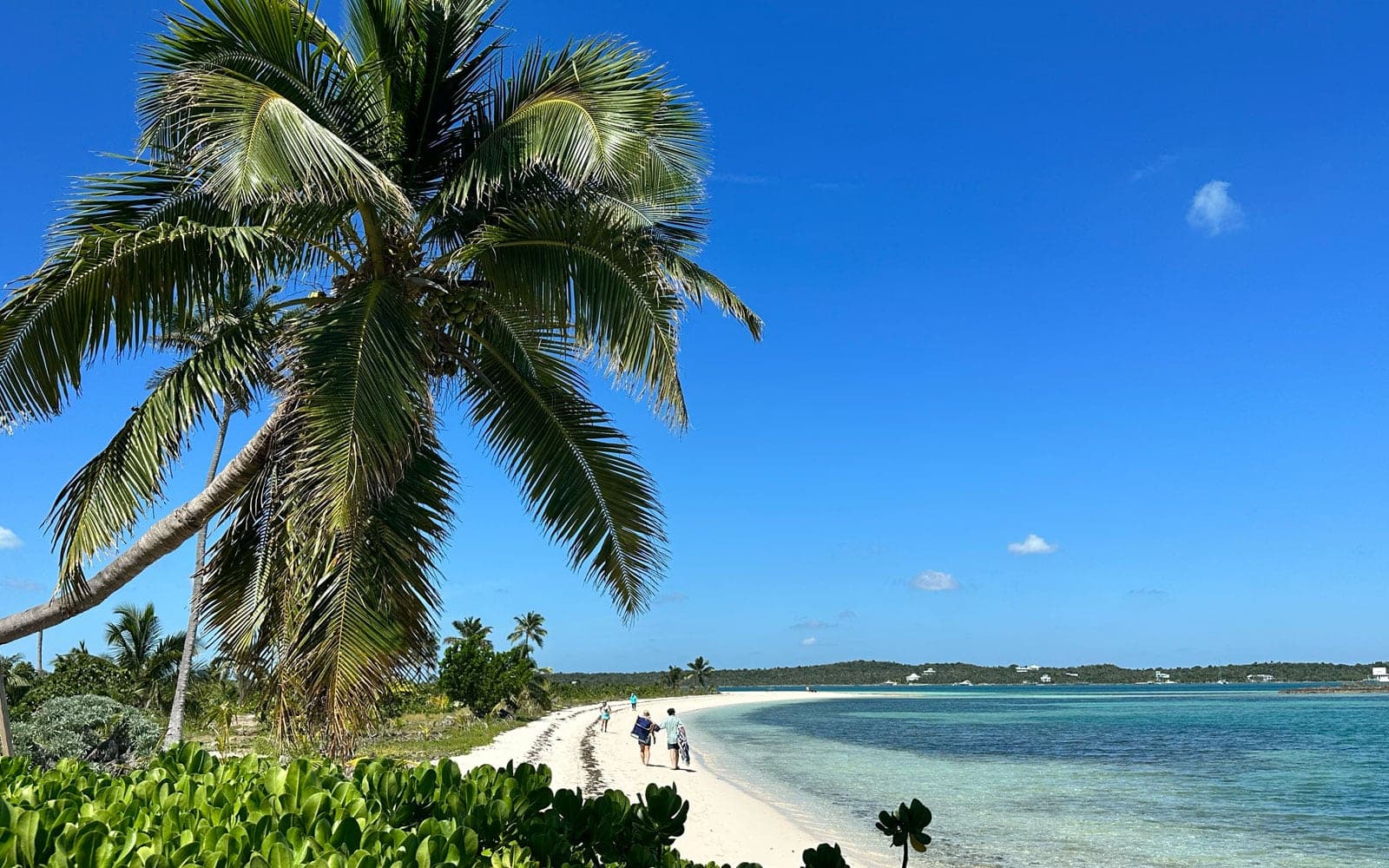
Where the road ends, a footpath through the trees leads to Tahiti Beach: a crescent of coconut palms and a sandbar that appears as the tide falls, with warm knee-deep water stretching toward Lubbers Quarters and Tilloo Cay. Boats anchor off the bar and a floating bar sometimes drifts in on busy afternoons.
Time your visit for low tide. Our Tahiti Beach guide explains how.
Getting around
Golf carts, bikes, boats, & your own feet
Visitors cannot rent cars on Elbow Cay. A handful of trucks belong to residents and service crews; everyone else drives a golf cart. Rent one for your whole stay, reserve it two to four weeks ahead in high season, and remember that the Bahamas drives on the left. Carts are banned from the historic centre of Hope Town, so park at the edge and walk in. Our golf cart guide lists every rental company on the island and how booking works.
Bicycles suit the flat lanes around Hope Town and are the only wheels allowed in the village. Paddleboards and kayaks are ideal on the sound side, where the water is calm enough for beginners.
A boat is the true car of the Abacos. With a rental centre-console you can reach Tahiti Beach in ten minutes, the lighthouse dock in fifteen, and the beach bars of Great Guana Cay or the boatyards of Man-O-War Cay in half an hour, all across protected water. Several companies in White Sound and Hope Town rent boats by the day or week, and local captains run fishing, snorkelling, and island-hopping charters if you would rather not drive. Every one of them is in our local business directory.
Don't Miss
Elbow Cay highlights
Weather & seasons
When to visit Elbow Cay
Elbow Cay has a subtropical climate softened by constant sea breeze. Water temperatures range from the low 70s °F in winter to the mid-80s in late summer. Here is what each part of the year feels like.
| Months | Daytime highs | Night lows | What to expect |
|---|---|---|---|
| December – February | Upper 70s °F | Mid-60s °F | Dry, breezy, occasional cold fronts. Peak season; book early. |
| March – April | Upper 70s to low 80s °F | Upper 60s °F | Warm days, calm seas, spring break crowds. Many say the best weather of the year. |
| May – June | Low 80s °F | Around 70 °F | Hot and settled. Hurricane season officially opens June 1 but storms are rare this early. |
| July – September | Upper 80s °F | Mid-70s °F | Hottest and most humid. Peak hurricane risk in August and September; many businesses take a break in September. |
| October – November | Low 80s °F | Low 70s °F | Storm risk fades, water still warm, the island reopens. A quiet, good-value shoulder season. |
Hurricane season runs June 1 to November 30, with the highest risk in August and September. Storms that affect Abaco are infrequent but, as Dorian showed, can be severe; travel insurance is sensible for late-summer trips. Our best time to visit guide goes month by month, including surf and fishing seasons.
Beyond Elbow Cay
The neighbouring cays
Part of what makes Elbow Cay special is what surrounds it. Across a few miles of calm water lie islands with their own personalities, all reachable by rental boat or the local ferries.
- Man-O-War Cay, just north, is a quiet, dry (no alcohol sold) boat-building community famous for its canvas bags and wooden boats.
- Great Guana Cay has seven miles of Atlantic beach and the beach bars Nippers and Grabbers, where Sunday pig roast is an Abaco institution.
- Lubbers Quarters and Tilloo Cay, directly south across from Tahiti Beach, are mostly private homes, with a couple of beloved waterfront restaurants reachable only by boat.
- Marsh Harbour, on the mainland, is the commercial hub: the airport, large grocery stores, a hospital clinic, marine supply, and the ferry docks.
See our island hopping guide for distances, what to see on each cay, and how to plan a day on the water.
Make Catch A Wave
Your Island Home Base
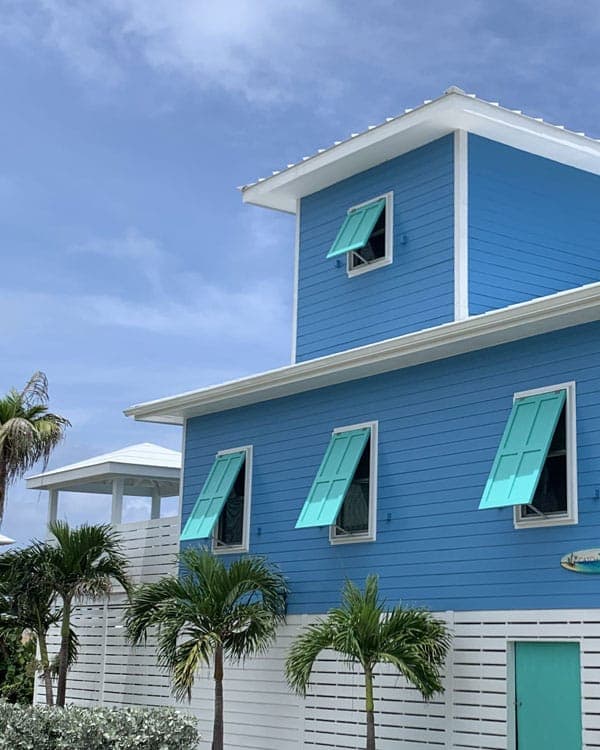
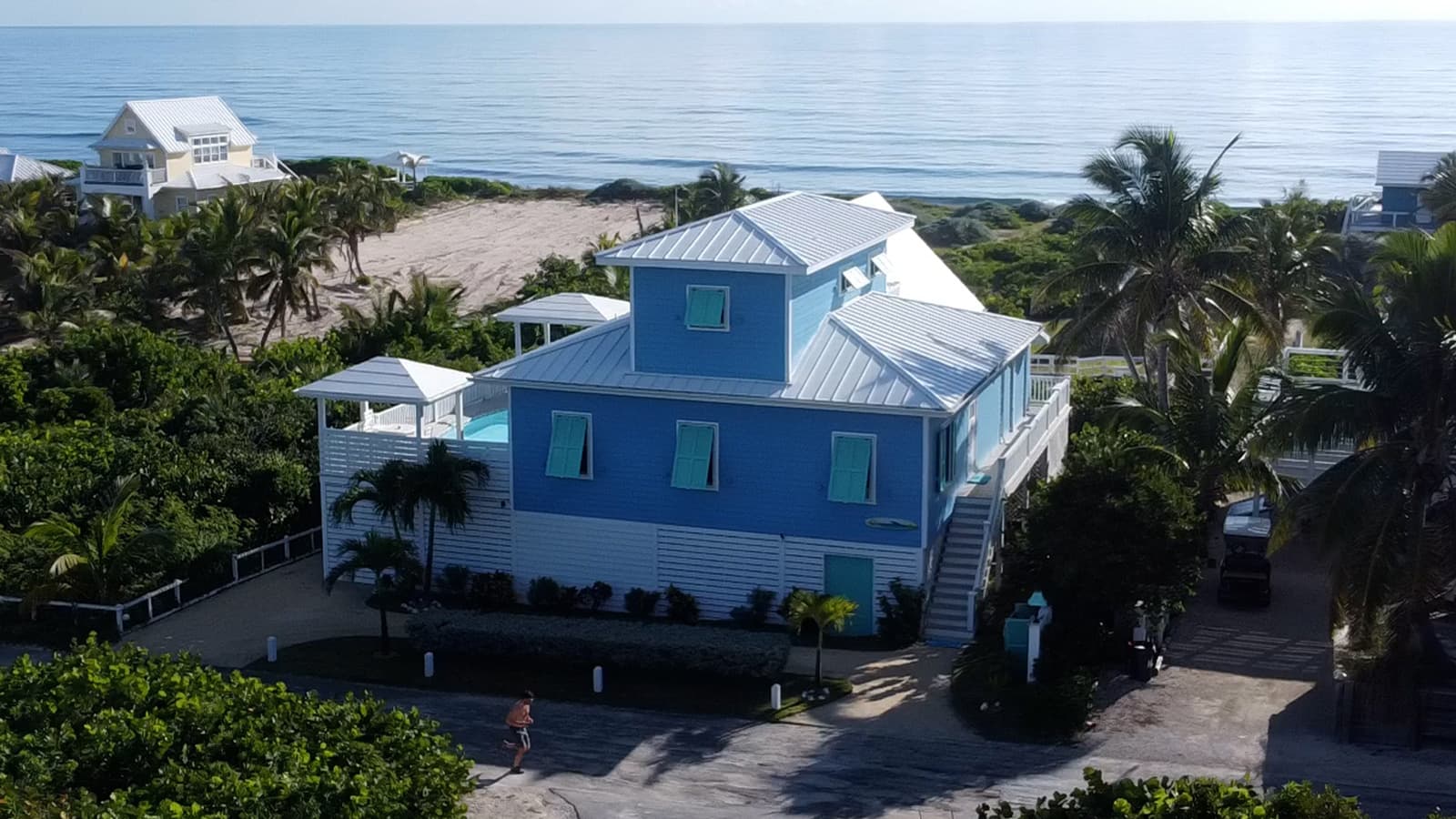
Catch A Wave sits on the Atlantic side of Elbow Cay near White Sound, midway along the island. Walk down to the surf beach, cart to Tahiti Beach or into Hope Town in minutes, and come home to a private pool and ocean decks. Three bedrooms, two baths, sleeps six to eight.
- Fenced-in private pool
- Steps to surf beach
- Breathtaking ocean decks
- Golf cart access
- Fast Wi-Fi & workspace
- Fully equipped kitchen
Frequently Asked
Elbow Cay & Hope Town FAQs
Elbow Cay is a five-mile-long barrier island in the Abacos, in the northern Bahamas. It lies about four miles east of Marsh Harbour on Great Abaco Island, with the Atlantic Ocean on its east coast and the sheltered Sea of Abaco on its west. Its main settlement is Hope Town.
Yes. Hope Town is the historic settlement at the northern end of Elbow Cay and the island's only town. People often use the names interchangeably, but Hope Town is the village and Elbow Cay is the whole island.
Fly into Marsh Harbour (airport code MHH), which has direct flights from South Florida and Nassau. Take a ten-minute taxi to the ferry dock, then the passenger ferry across the Sea of Abaco to Hope Town or White Sound, about twenty minutes. There is no airport or bridge on Elbow Cay itself.
Leonard M. Thompson International Airport in Marsh Harbour, code MHH. It is roughly an hour from Fort Lauderdale, Miami, or West Palm Beach, and about 35 minutes from Nassau.
Roughly four to five hundred year-round residents. The Hope Town district recorded 458 people in the 2010 census. The population swells considerably in winter with second-home owners and visitors.
The red-and-white striped Elbow Reef Lighthouse in Hope Town, one of the last hand-wound, kerosene-burning lighthouses in the world; Tahiti Beach and its low-tide sandbar; pastel Loyalist cottages dating to the 1780s; and calm turquoise boating water in the Sea of Abaco. It is also one of the Bahamas' best surf spots on the Atlantic side.
Climb the lighthouse, wade the sandbar at Tahiti Beach, surf or swim the Atlantic beaches, rent a boat to island-hop to Man-O-War and Great Guana Cay, snorkel the reef, fish with a local guide, and eat at harbour-side restaurants and beach bars. Our things-to-do guide covers all of it.
Residents and service crews use a few trucks, but visitors cannot rent cars. Golf carts are the standard way to get around, and the historic centre of Hope Town is limited to walking and bicycles.
Yes. Dorian struck on September 1, 2019 as a Category 5 storm and damaged or destroyed most buildings on the island. Homes, docks, restaurants, and marinas have since been rebuilt, the lighthouse survived and was restored, and the island has been fully open to visitors for several years.
Hope Town is a small, close-knit community with very little crime, and it is widely considered one of the safest places in the Bahamas for families. The usual island precautions apply: watch the sun, respect the Atlantic surf, and drive golf carts slowly.
Several companies rent golf carts on Elbow Cay, including Island Cart Rentals, Getaway Golf Carts, Hope Town Cart Rentals, Elbow Cay Cart Rentals, and Big Hill Golf Cart Rentals. Book two to four weeks ahead in winter and spring. Phone numbers are in our local directory.
There is no ATM on Elbow Cay. A bank branch in Hope Town opens limited hours one day a week. Bring enough cash for taxis, ferries, and small vendors; most restaurants and rental companies accept cards.
Yes. Hope Town and White Sound have small grocery stores, including Vernon's Grocery and LVA, plus liquor stores and a bakery. Stock up soon after arriving, because shelves thin out between supply boats. Celestial Water delivers drinking water and there is a refill station in White Sound.
The Hope Town Clinic handles routine care on weekday mornings for a small visitor fee. Marsh Harbour, a ferry ride away, has a larger government clinic. Serious emergencies are flown to Nassau or Florida.
Book Direct & Save
Make Elbow Cay your home base
Check live availability and book directly with the owners — no booking fees, just a great home on Elbow Cay.